

For makers of live-edge furniture, Rubio Monocoat Oil Plus 2C has become the gold standard. Its single-coat molecular bonding technology preserves the matte, organic feel of species like Walnut and Guanacaste (Parota) without building a plastic film.
However, a common question arises among woodworkers transitioning from traditional varnishes or polyurethanes:
This oil is thick. Should I thin it for better penetration?
The short answer is no.
The long answer is that while you cannot use traditional solvents, there are specific dilution techniques and prep agents designed to solve the exact problems you are trying to fix with a thinner.
This guide covers when and how to modify your Rubio application for the unique demands of live-edge slabs.
The Chemistry: Why You Must Not Use Mineral Spirits
To understand why you shouldn't reach for the paint thinner, you must understand how Rubio works.
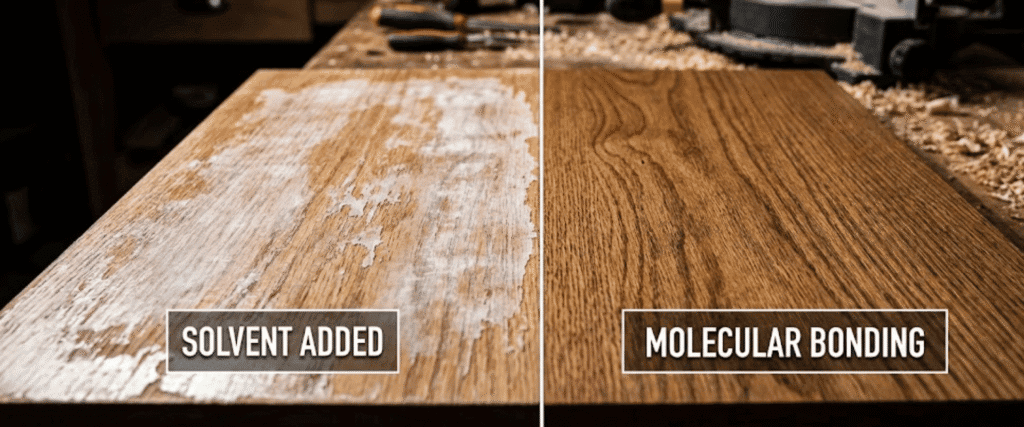
Unlike traditional stains that soak into the wood (saturation) or polyurethanes that sit on top (film-forming), Rubio Monocoat relies on a molecular reaction with the cellulose fibers in the wood.
The Zero VOC Constraint
Rubio Monocoat is a 0% VOC (Volatile Organic Compound) hardwax oil. It contains no solvents or water.

- If you add Mineral Spirits or Paint Thinner, you break the molecular technology. The solvent dilutes the active ingredients, preventing them from finding and bonding with the cellulose. This results in a weak finish that may flake, turn white, or fail to cure.
- The Result: A compromised slab that requires complete re-sanding.
When to Dilute: The Only 3 Approved Scenarios
While you cannot add chemical solvents, there are three specific scenarios where thinning or modifying the mixture is approved and necessary for high-end furniture.
1) Diluting Intensity (The Ghost Mix)
The Goal: You want the protection of Rubio, but the colored oil (e.g., Cotton White or Charcoal) is masking the grain of a highly figured Maple or Walnut slab too heavily.

The Solution: You can dilute the pigment load by mixing it with Rubio Monocoat Oil Plus 2C Pure (Clear).
- Ratio: varying from 10% to 50% Pure.
- Effect: This reduces the opacity of the color without changing the viscosity or chemical properties of the oil. It allows the chatoyancy (shimmer) of the live-edge to show through the color.
2) Solving Viscosity in Cold Shops
The Goal: It is winter, and your shop is below 60°F (15°C). The oil feels like cold honey and won't spread easily over a large dining table slab.

The Solution: Do not add solvent. Instead, use thermal thinning.
- Method: Place the metal can of Part A (Oil) in a bucket of warm water for 10-15 minutes before mixing.
- Effect: This lowers the viscosity temporarily, allowing the oil to flow deep into micro-cracks and grain patterns without altering the chemical composition.
3) The Thinner Replacement for Oily Woods (Teak, Parota)
The Goal: You are finishing a dense, oily tropical hardwood like Guanacaste (Parota) or Teak. You are worried the oil is too thick to penetrate the natural resins of the wood.

The Solution: Do not thin the oil. Instead, strip the wood's natural oils using Rubio Monocoat Cleaner.
- Why: These woods have natural antioxidants that block the finish. Thinning the Rubio won't help. You must clean the wood surface thoroughly with the Cleaner (not just compressed air) to remove the natural oils, creating a clear path for the Rubio to bond.
Comparison: Rubio vs. Traditional Finishes
Understanding when to thin requires knowing the difference between film-building and molecular bonding.
| Feature | Polyurethane / Varnish | Rubio Monocoat Oil Plus 2C |
|---|---|---|
| Primary Action | Creates a plastic layer on top of the wood. | Bonds molecularly inside the wood fibers. |
| Can You Thin It? | Yes. Often thinned with mineral spirits for the first coat so it acts as a sealer. | No. Never add solvents; this breaks the protection. |
| Viscosity | High, like syrup. Thinning helps it flow. | Medium, like honey. Warming helps it flow. |
| Layering | Needs multiple coats (3–4) with sanding between coats. | Single coat only. A second coat will not bond to the first. |
| Best For | High‑gloss, plastic‑look surfaces. | Natural, matte, textured live‑edge slabs. |
The Penetration Hack: WoodPrep vs. Thinning
If your intent in thinning is to get the finish deeper into the wood (especially on hard end-grain or knots), the correct product is not a thinning agent, but a preparatory agent.
Rubio WoodPrep
For live-edge slabs where sanding errors are common due to varying grain directions, Rubio WoodPrep acts as a specialized cleaner that raises the grain slightly.

- Function: It removes sanding dust and opens the pores of the wood.
- The Dilution Effect: Because the pores are open, the wood absorbs more oil, mimicking the deep penetration you would try to achieve by thinning a varnish.
- Best For: Maple, Beech, and any slab with complex, swirling grain.
The Sheen Dilution: Universal Maintenance Oil
Sometimes, clients ask for a thinned look because they actually want a slightly higher sheen or a refreshed look on an older table.

Do not apply a second coat of Oil Plus 2C (it won't stick). Instead, use Universal Maintenance Oil.
- Viscosity: Much thinner than Oil Plus 2C.
- Purpose: It nourishes the wood and adds a slight satin sheen (approx 15-20% sheen).
- Application: It applies extremely thin, maximizing the natural look while refreshing the protection.
Conclusion
In the world of live-edge furniture, thinning Rubio Monocoat is a recipe for disaster.
The system is designed to function without solvents. If you are facing issues with penetration or spread, the culprit is likely over-sanding (going past 150 grit) or insufficient cleaning of natural wood oils.
By using heat to manage viscosity and Pure to manage color intensity, you can achieve a custom, professional finish that honors the raw beauty of the wood.
Frequently Asked Questions (FAQs)
1. Can I use mineral spirits to thin Rubio?
No. Adding mineral spirits or solvents breaks the molecular bond. It will cause the finish to fail, turn white, and lose its durability on your live-edge slab.
2. How do I make the oil runnier in cold weather?
Instead of thinning agents, use heat. Place the Part A can in warm water for 15 minutes. This lowers the viscosity (thermal thinning) without damaging the chemistry.
3. Can I dilute a dark color like Charcoal?
Yes, but only by mixing it with Rubio Monocoat Pure (Clear). This reduces the pigment intensity while maintaining the full protective strength of the oil.
4. Should I thin Rubio for oily woods like Parota?
No. Thinning won't help penetration on oily woods. Instead, use Rubio Cleaner to strip the wood's natural oils before application so the finish can bond properly.
5. Why is my finish feeling sticky?
Stickiness happens if you leave excess oil on the surface or sand past 150 grit. You must buff off all excess oil within 5 minutes so the surface is dry to the touch.


